

Indicolite, a captivating gemstone known for its mesmerizing blue hues, holds a unique place in the world of gemology. With its serene color and fascinating properties, indicolite has long been cherished by gem enthusiasts and collectors alike. In this blog, we'll delve into the enchanting world of indicolite, exploring its origins, characteristics, symbolism, and significance in both ancient lore and modern times.
Origins and Formation:
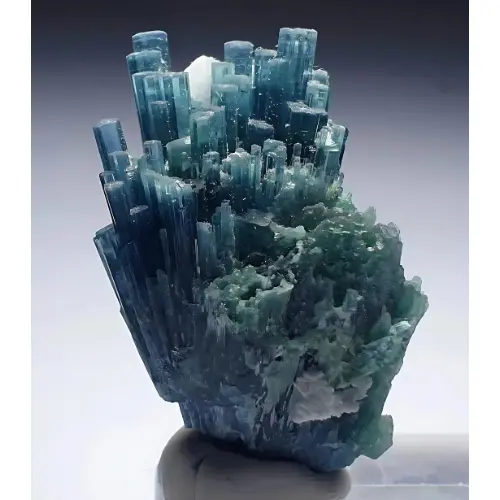
Indicolite, derived from the Latin "indicum" for blue and the Greek "lithos" for stone, is a variant of tourmaline belonging to the elbaite group, celebrated for its intricate chemical composition. Renowned for its vibrant blue hues ranging from delicate aqua to deep blue-green, indicolite owes its captivating coloration to the iron present within its crystal lattice.
Primarily forming in pegmatite deposits, indicolite emerges within igneous rocks characterized by their sizable crystals, often in conjunction with minerals like quartz and feldspar. Over millions of years, the gemstone undergoes crystallization within the Earth's crust, crafting its unique allure.

Indicolite's global presence encompasses diverse locales such as Brazil, Madagascar, Mozambique, Namibia, Nigeria, Afghanistan, Pakistan, and the United States, with Brazil and Madagascar serving as principal sources. Mining indicolite proves challenging due to its occurrence in small, irregular veins. Surface mining techniques, favored for their cost-effectiveness and efficiency, involve extraction from open pits or alluvial deposits.
In Brazil, indicolite extraction centers around regions like Minas Gerais, Bahia, and Rio Grande do Norte, where it coexists with minerals like mica, quartz, and feldspar. Madagascar's southern reaches, particularly near Ihosy, yield notable indicolite deposits.
Indicolite's journey from the depths of the Earth to adornment in jewelry showcases the intricate interplay between geological processes and human endeavor.
Properties:
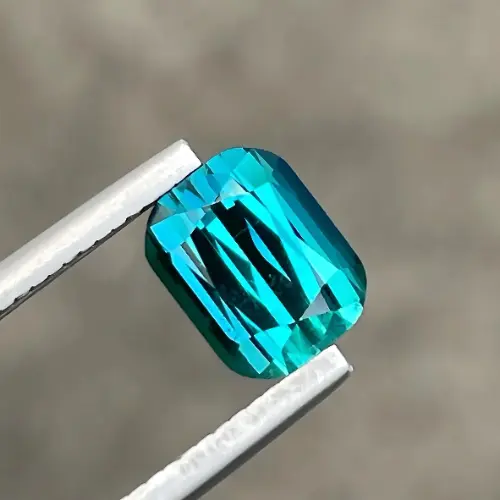
Indicolite boasts a robustness with a hardness rating of 7 to 7.5 on the Mohs scale, rendering it resilient for everyday wear. Its specific gravity ranges between 2.82 and 3.32, while its refractive index spans from 1.603 to 1.655.
This gemstone is renowned for its distinct optical phenomena, including pleochroism and chatoyancy. Pleochroism, characterized by different colors viewed from various angles, can reveal two or three distinct hues in indicolite depending on light direction. Similarly, chatoyancy, often likened to the mesmerizing gaze of a cat, produces a slender band of light across the gem's surface.
Characteristics:
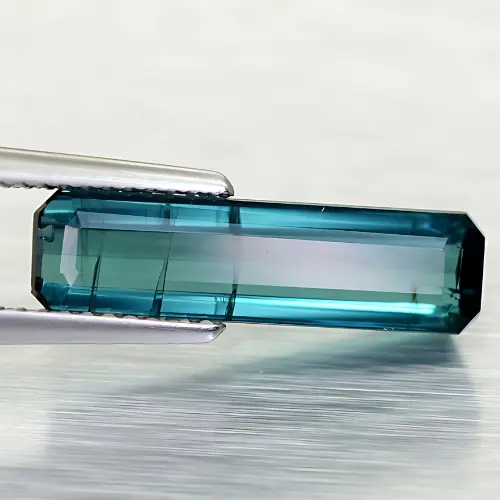
One of the most striking features of indicolite is its color. The finest specimens exhibit a vivid blue hue reminiscent of the tranquil waters of the ocean. The gem's color intensity can vary depending on factors such as the presence of trace elements and the angle of observation.
In addition to its captivating color, indicolite is prized for its excellent transparency and brilliance. When cut and polished, it exhibits a captivating luster that enhances its beauty. Indicolite crystals can vary in size, with larger stones being relatively rare and highly sought after by collectors.
Jewelry
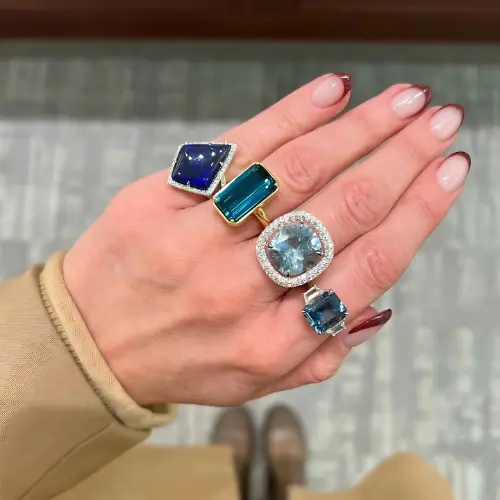
Indicolite's popularity in jewelry stems from its stunning blue hue and durability. It finds frequent use across a spectrum of jewelry styles, including:
1. Rings: Indicolite frequently graces rings, either as a standalone centerpiece or in combination with other gemstones.
2. Necklaces and Pendants: Whether as a singular focal point or part of a multi-gemstone arrangement, indicolite is a favored choice for necklaces and pendants.
3. Earrings: Indicolite's appeal extends to earrings, commonly seen in stud or dangling styles to accentuate its allure.
4. Bracelets: In bracelets, indicolite may feature either independently or as part of a multi-gemstone design, adding a touch of elegance to wristwear.
5. Brooches and Pins: Indicolite serves as a decorative embellishment in brooches and pins, lending its enchanting hue to enhance their visual appeal.
Maintenance and Care:
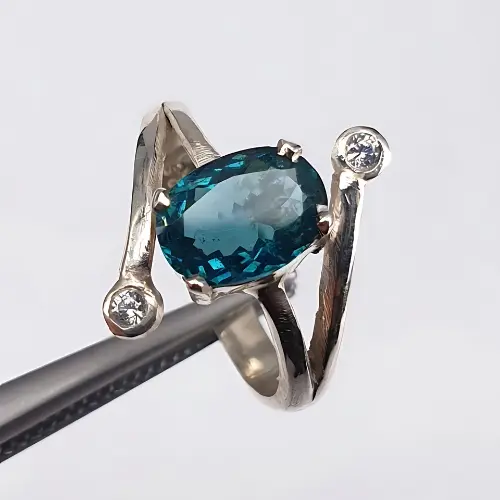
Maintaining indicolite gemstones is relatively straightforward, as they are suitable for everyday wear in various jewelry forms, including rings and bracelets.
Special attention is required for treated stones, particularly those that are fracture-filled. Avoid subjecting them to mechanical cleaners like ultrasonic or steam cleaners, as well as harsh chemicals.
To clean indicolite, use lukewarm water, mild soap, and a soft toothbrush. Gently scrub the gemstone, ensuring thorough rinsing before drying it with a soft, microfiber cloth.
Given tourmalines' sensitivity to extreme heat and abrupt temperature fluctuations, it's advisable to store indicolite in a cool environment, shielded from direct sunlight and other gemstones.
Symbolism and Significance:

Throughout history, gemstones have been imbued with symbolic meanings and mystical properties. Indicolite, with its serene blue color, has been associated with qualities such as calmness, tranquility, and emotional balance. It is believed to soothe the mind and promote a sense of inner peace and harmony.
In ancient times, indicolite was revered by cultures such as the Egyptians and the Greeks, who believed it to be a talisman of protection and healing. It was often used in amulets and jewelry worn for its perceived spiritual benefits.
In modern times, indicolite continues to be cherished for its beauty and symbolic significance. It is often used in fine jewelry designs, where its tranquil blue color adds a touch of elegance and sophistication.

Indicolite, with its enchanting blue hues and fascinating properties, remains a beloved gemstone cherished by collectors and enthusiasts around the world. Whether admired for its beauty, symbolic meaning, or metaphysical properties, indicolite continues to captivate hearts and minds with its timeless allure. As we continue to explore the wonders of the natural world, let us not forget the enduring beauty and mystique of this remarkable gem: indicolite, the gem of tranquility.


