
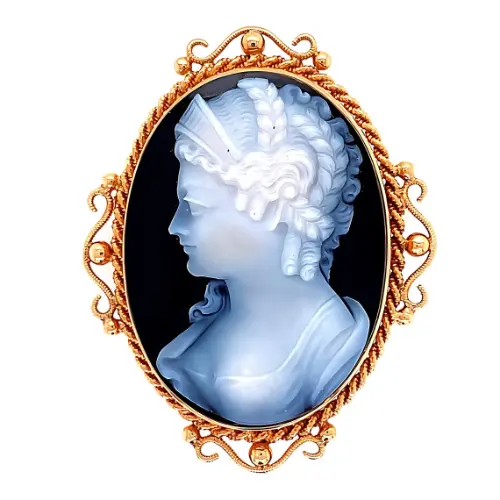
Cameo jewelry, with its intricate designs and rich history, has captivated hearts for centuries. From ancient origins to modern interpretations, these miniature masterpieces have adorned the noble and the fashionable alike. Join us on a journey through time and craftsmanship as we delve into the allure of cameo jewelry.
Ancient Origins:
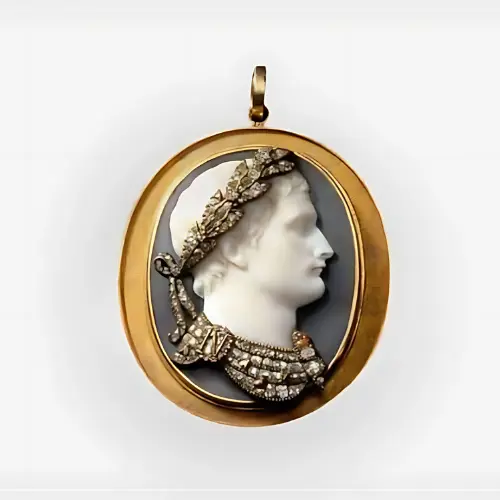
The ancient art of cameo carving has its origins in civilizations such as Greece and Rome, where it flourished as a form of expression and prestige. Initially sculpted from diverse materials including stone, shell, and eventually gemstones, cameos held immense value for their intricate reliefs portraying mythological tales, regal profiles, and symbolic motifs. Beyond mere adornments, these creations symbolized social status, authority, and artistic ingenuity.
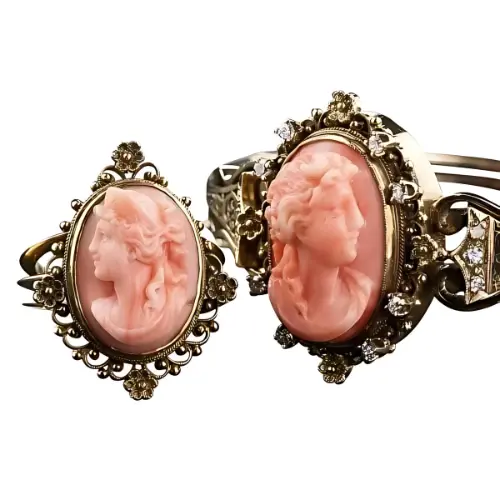
Cameos, whether fashioned from gemstones, shells, or alternative materials, feature relief carvings depicting various subjects such as landscapes, mythical characters, and notably, elegant profiles of women. Typically mounted in precious metals like gold or silver, they adorn an array of jewelry pieces including necklaces, bracelets, pendants, and rings. Rooted in a tradition of stone carving dating back to ancient petroglyphs, cameos are believed to have held spiritual significance in prehistoric times
During the era of the Roman Empire, skilled artisans carved intricate motifs and portraits onto gemstones and glass, catering to both mythological narratives and political symbolism. This art form extended its reach to encompass a wider audience, with glass cameos becoming accessible to individuals from lower social strata.
Renaissance Revival:
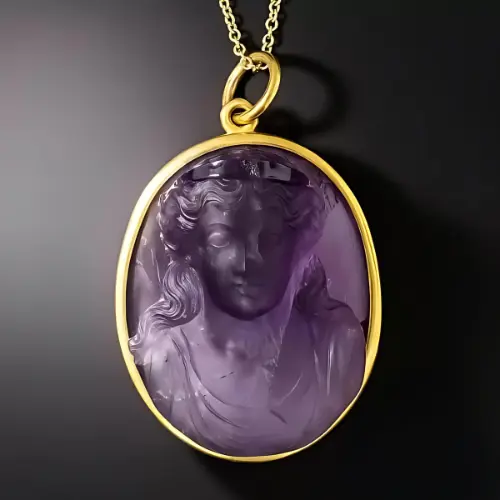
During the Renaissance period, cameo jewelry experienced a resurgence in popularity. Artisans revived the techniques of ancient carvers, creating exquisite pieces for the nobility and clergy. Intricately carved cameos adorned brooches, rings, and pendants, serving as symbols of wealth, taste, and cultural refinement. Renaissance cameos often featured classical themes, biblical narratives, or portraits of influential figures, reflecting the era's fascination with antiquity and humanism.
Victorian Sentimentality:
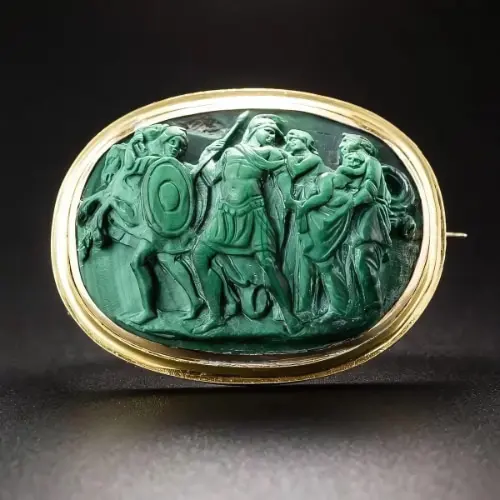
The 19th century saw cameo jewelry reach its zenith of popularity, particularly during the Victorian era. Queen Victoria's love for sentimental jewelry influenced fashion trends, and cameo pieces became cherished tokens of affection and remembrance. Carved from materials like shell, lava, coral, and even glass paste, Victorian cameos often depicted romantic motifs, floral arrangements, or sentimental scenes. Lockets adorned with miniature cameos became beloved keepsakes, holding portraits of loved ones close to the heart.
The Cameo Parure of Swedish Royal Family


The iconic cameo tiara, famously donned by Princess Victoria during her nuptials to personal trainer Daniel Westling in 2010, holds a storied history dating back to the early 19th century. Originally part of a parure belonging to Josephine de Beauharnais, gifted by her second husband, Napoleon Bonaparte, the tiara exudes timeless elegance. Passed down through generations via dynastic marriages, it found its way into the House of Bernadotte through Josephine's granddaughter, Josephine of Leuchtenberg, upon her union with Crown Prince Oscar of Sweden in 1823. Since then, it has been a cherished heirloom within the royal family, worn notably by Princess Birgitta and Princess Desiree on their respective wedding days. Adorned with individual cameos set in yellow gold, each encircled by seed pearls and interspersed with delicate pearl floral motifs, the tiara tells the mythical tale of Cupid and Psyche. Its enduring presence at significant royal events, including Nobel Prize celebrations, continues to embody grace, tradition, and the timeless allure of cameo craftsmanship.
The Artistry of Cameo Carving
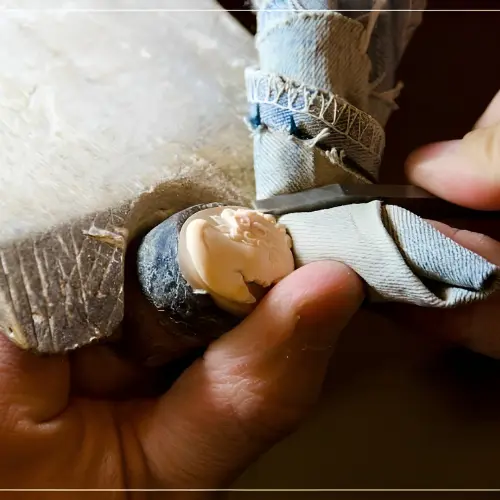
Cameo carving stands as a meticulous art form demanding adept skill, unwavering patience, and a discerning eye for detail. Master carvers delicately sculpt layers of contrasting hues within a solitary material, like shell or stone, crafting depth and dimension in the relief. Each cameo emerges as a distinct masterpiece, its design often guided by the innate contours and colors of the chosen medium. In the contemporary realm, artists continue to explore the boundaries of this ancient craft, embracing novel materials, techniques, and styles while upholding age-old traditions.
Traditionally, cameos commemorating significant events, such as marriages, could be mass-produced without the need for extended sittings by the subjects. Utilizing photographs, carvers could replicate identical cameos, making these commemorative pieces accessible to a broader spectrum of society previously unable to indulge in such luxuries. England witnessed the importation of thousands of cameos, eagerly awaiting mounting by specialized jewelers. These artisans often focused on specific types of cameos, such as antiquities, coral, or mosaic, catering to varied tastes and preferences.
Customers were presented with an array of mounting options, from archeological styles to intricate Renaissance revival frames adorned with gemstones or enamel. Rings, brooches, bracelets, lockets, and pendants provided versatile canvases for cameo adornment. With choices ranging from subject matter to frame styles, materials, and modes of wear, cameo jewelry offered an endless array of possibilities, enticing collectors to own multiple pieces, each bearing its unique charm and allure.
Enduring Appeal:
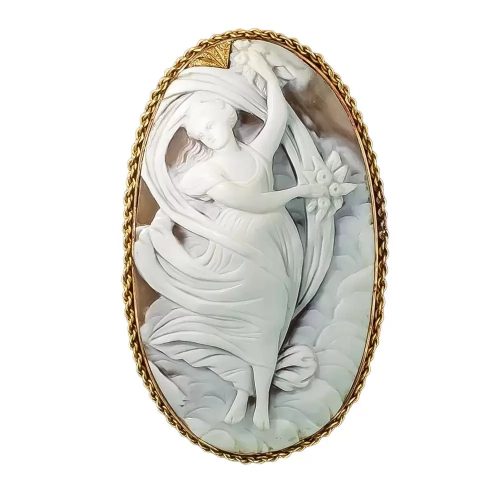
Despite evolving fashion trends, cameo jewelry continues to enchant admirers worldwide. Whether passed down as heirlooms or acquired as cherished treasures, cameos carry a timeless elegance and sentimental value that transcends generations. From classic Victorian brooches to contemporary statement pieces, cameo jewelry remains a symbol of beauty, craftsmanship, and artistic expression.
Cameo jewelry stands as a testament to the enduring allure of artistry and craftsmanship. From its ancient origins to its modern interpretations, cameo pieces continue to capture the imagination and evoke a sense of timeless elegance. Whether worn as a personal adornment or admired as a work of art, cameo jewelry remains a cherished treasure, connecting us to the past while celebrating the beauty of the present.
You may also like:
UNVEILING THE ALLURE OF ROMAN JEWELRY
QUEEN VICTORIA'S ENDURING LEGACY: THE PROFOUND INFLUENCE OF MOURNING JEWELRY IN THE VICTORIAN ERA
THE TIMELESS ALLURE OF PALM JEWELRY


